For about fifty years, an ordinary person in this country could climb into the middle class on nothing but a trained mind. No capital. No inheritance. No land, no machine, no family name to trade on. Just study and work. You learned something difficult, someone paid you to do it, and that paycheck was your claim on the nation's wealth — the reason the economy had to deal you in at all.
It is the best deal the modern economy ever offered an ordinary person — a share of the country's wealth for nothing but what you could learn. And it is ending.
We have watched the machine come for people's work twice before, and both times it ended well. The first wave — the Industrial Revolution — drove the farmhand off the land, and the factory was waiting to catch him. The second — automation, and the great wave of globalization — emptied that factory, and the office was waiting to catch his children. A way of making a living ended, and each time a wider one opened beneath it. That is the pattern, and it is real.
Farm to factory. In 1900, roughly four in ten Americans worked the land. And a whole village made its living in orbit around them — the blacksmith at his forge, the miller, the wheelwright. It was a world built on muscle, the farmer's and the horse's, and nearly every trade in town existed to keep that muscle working.
Then the machine arrived. The tractor, the combine — one man on a seat doing the work that had taken a dozen backs and a team of horses. The field didn't need those dozen anymore. It needed just one.
If you'd stood at the edge of that field and asked, "Where do all these people go?" — nobody could have told you. There was no answer to give. And yet they went somewhere. They drifted toward the cities, toward the smokestacks, and within a generation they'd become something their grandfathers had no word for: riveters and welders and machinists. The work was steadier than the harvest, and often better paid than the field had ever been.
The wide floor of the field emptied, and a wide factory floor opened to catch it.
Factory to office. In 1950, roughly three in ten Americans made their living in a factory — the riveter, the welder, the machinist. And a whole town made its living in orbit around them — the diner, the union hall, the corner store. It was a world built on the line, on the steady wage and the lunch whistle, and nearly every business on Main Street existed to spend what that wage brought home.
Then the machine arrived. The robot arm, the shipping container — an arm that welded all night without a wage, and a steel box that could carry the whole job overseas. The line didn't need those hands anymore. The ones it kept, it paid less.
If you'd stood on that factory floor and asked, "Where do all these people go?" — nobody could have told you. There was no answer to give. And yet they went somewhere. They drifted from the line into the office, out of the noise and into the fluorescent hum, and within a generation they'd become something their fathers had no word for: clerks and bookkeepers and analysts. The work was cleaner than the line, and often better paid than it had ever been.
The wide factory floor emptied, and a wide office floor opened to catch it.
Today, more Americans make their living with a trained mind than ever before — the analyst, the coder, the paralegal, the copywriter. And a whole economy makes its living in orbit around them — the software vendor, the office tower, the downtown lunch counter. It's a world built on the credential and the salary, and nearly every business downstream of it lives on what those salaries spend.
Then the machine arrived. The model, the agent — a mind that never sleeps, that reads every document and drafts every memo for the price of the electricity it burns. The office doesn't need those hundred anymore. It needs a few.
Stand in that office today and ask, "Where do all these people go?" — and nobody can tell you. There is no answer to give. We say they'll go somewhere; they always have. They'll drift out of the cubicle and into —
The wide office floor is emptying.
Into what?
There are only two reflexive answers to Into what?
The pessimist says nowhere. This is the end of work — the machines have finally won. It's an old fear, and it has an old name: the lump-of-labor fallacy, the belief that there's a fixed pile of work in the world, so that every job a machine takes is one gone for good. Every generation reaches for some version of it; the Luddites smashed the looms over it. And so far, it has been wrong every time — because the pile was never fixed.
The optimist knows this, and says somewhere new. There has always been somewhere new, and he has two hundred years of being right. The work didn't run out when the loom came, or the tractor, or the assembly line — it grew, and the displaced always found a wider floor waiting below. So when he tells you the office will empty into something we can't yet picture, don't wave him off. History is sitting in his lap.
The people always followed the windfall. That's the thing both of them skate past, and it's what every upheaval in this essay quietly teaches: find where the windfall pooled, and you've found where the next floor opened. So before we bet on the optimist's streak holding one more time, let's ask the question neither side ever does — where does the windfall go?
So follow it. When the tractor made food cheap, it created a windfall — the gap between what food used to cost and what it now cost. Where did that windfall go?
Not to the farmer — not for long. A little stuck to whoever mechanized first, but competition pried it loose fast. It went downstream, to everyone, in a form so ordinary we don't call it wealth: a smaller bill at the grocer. Economists have a lovely name for that one, too — consumer surplus. It's the money that stays in your pocket when something you need gets cheaper. Bread drops from a dime to a nickel, and you didn't earn a thing — but you have that nickel, every day, for the rest of your life. Multiply it across a nation and it's a fortune, hiding in plain sight as the absence of a cost.
That pile of nickels didn't sit still. The country spent it — on things that had scarcely existed while bread was dear: a Ford in the driveway, a radio in the parlor, a Sunday at the pictures. And every one of those new comforts had to be built, by someone. The grocery money the tractor freed up became the wage that built the cars and the radios and the movie houses — and the farmhand walked off the emptying field and into the very factory his cheaper bread had paid to build.
Then it happened again, a generation later. The assembly line and the shipping container did to goods what the tractor had done to food — they made them cheap. You watched the last act of it yourself: a factory in China, a container ship, a Walmart at the edge of town — and a refrigerator, a flat-screen television, a season's worth of clothes cost a fraction of what they once had. The difference dropped back into the family's pocket. The same nickel off the bread, now a few dollars off nearly everything on the shelf.
And that money didn't sit still either. With the necessities cheap and a little left to spare, families started buying things they couldn't hold: a doctor's check-up, a mortgage on a house, a degree with a name on it, a song they didn't have to sing themselves. Services — and a service has to be rendered, by someone. So the savings off the cheap goods became the salaries of the people who rendered them, and every year there were more of them: more doctors, more lawyers, more accountants, more programmers. The factory worker rarely made that leap himself — his children did. They took the degree the surplus had paid for and walked into the office it had built.
Five links, every time:
windfall → consumer surplus → re-spent → new demand → new production that needs people.
So let's follow the value into our own predicament — link by link.
An AI reviews the contract, drafts the design, does the week's work in an afternoon. There's the windfall. It runs downstream, exactly as always, to whoever buys the result a little cheaper: consumer surplus, the same nickel off the bread, only now the bread is a legal contract, a tax return, a company logo.
And it will keep flowing, exactly as it always has. That money will get re-spent — it always is. The spending will call up new demand, new wants, new work to be done. Four links of the old chain, clicking into place right on schedule. And every instinct we have says the fifth is coming up behind them, the way it always has: the new demand becomes new jobs, and a floor opens under the falling.
But what if the new demand can be satisfied by the same machine that created the windfall?
Every time before, it couldn't. The tractor that emptied the field could not build the Ford. The robot arm couldn't analyze your mammogram. The factory in China couldn't write your contract.
What faces us now is different in kind: it is general. It does the contract, the design, the week's work in an afternoon — and it can turn and make whatever new thing the windfall dreams up next.
So the fifth link fails: new production no longer needs people. The one condition that saved us every time is the thing the machine quietly removes.
The sharpest optimists have one card left, and it has a name: the Jevons paradox. Make a thing cheaper, a Victorian economist noticed, and the world doesn't use less of it — it uses far more. Make code cheap and we won't write less software; we'll write oceans of it. They're right, and it's their best move. But watch where it lands. The demand for the work explodes — and the machine is what rushes in to meet it. More software than the world has ever seen, built by fewer people than ever. The paradox holds for the output and breaks for the worker.
Which is the whole of it, in a sentence:
The value still flows somewhere we can spend it. It no longer flows somewhere humans are needed to earn it.
So change the question. Don't ask whether new work appears. Ask whether it can catch a mass of people — and whether it pays a living. Every rung that mattered in the last two centuries was both. The factory floor and the office floor weren't just jobs; they were wide, well-paid jobs that an ordinary person could reach by learning. That combination is the thing that made the ladder a ladder.
So name it. When people say the displaced will "move up," I keep asking the same thing: up to what? The answers are fewer than they sound. Two of them are jobs — and I'll take both seriously in a moment. A third isn't a job at all: stop being labor and become an owner. That one's the deepest answer of the three, which is exactly why it gets its own essay and not a line here — it's a wall you buy your way past, not a rung you climb, and we'll come back to it. For now, the two that are jobs, because they're the ones the optimist reaches for first.
The first: "They'll orchestrate the AI — supervise the agents, manage the fleet." Fine. Let's literalize it. A former analyst now directs a swarm of agents and does what a ten-person team used to do. But notice what that is: it is not a new floor with new seats. It's the same work, with nine fewer people. The entire value of the role is more output, fewer humans. So "moving up a rung" here means, precisely: nine people leave, and one stays with a better title. The promotion is the layoff. You cannot rehouse a displaced multitude on a rung whose whole purpose is to need fewer of them.
The second: "New categories we can't imagine yet — like podcaster, like app developer." Real, and I believe it. But ask the only question that matters for a ladder: how wide, and how well-paid? And hold that question, because to answer it honestly we have to talk about where a wage actually comes from. That turns out to be the crux of the whole thing — and it's the part almost nobody slows down to explain.
Here's a question that sounds simple and isn't: why does anyone get paid what they get paid?
The tempting answer is "because the work is valuable." But that can't be the whole story, and there's a 250-year-old puzzle that proves it. Adam Smith named it in 1776 and couldn't crack it. It's called the diamond-water paradox. Water keeps you alive; without it you die in days. A diamond does nothing — it's a pretty rock. And yet water is nearly free and a diamond costs a fortune. If price followed value, water would be priceless and diamonds worthless. It's the other way around. Why?
The answer took economists another hundred years to work out, and it is this: price isn't set by how useful something is in total. It's set at the margin — by how much the next one is worth, and that depends on how scarce it is. Water is abundant, so the next glass is worth almost nothing, even though all the water in the world is worth everything. Diamonds are rare, so the next one is dear. Scarcity, not usefulness, sets the price.
Wages work the same way. Your pay tracks two things multiplied together: the value of what you produce, and the scarcity of your ability to produce it. You need both. A skill nobody wants pays nothing, however rare. And — here's the diamond-water half people miss — a skill everyone has pays nothing either, no matter how essential it is. A wage was never paid for value. It was paid for scarce value.
Now you can see why knowledge work paid so well for fifty years. A trained mind was valuable — it produced things people wanted — and it was scarce, because learning hard things is slow and not everyone does it. Productive and rare. A diamond. That's the rung, explained: it paid a broad, good wage because trained cognition was a diamond that ordinary people could, with effort, go and acquire.
AI does not destroy the value of human cognition. Your judgment still produces plenty — arguably more than ever, amplified by the machine.
What AI does is change the scarcity. It takes the trained cognition that used to be rare and makes it abundant. It turns the diamond into water. Still essential — more essential, even — and now everywhere, on tap, for the price of a subscription.
And we already know what the market pays for something essential and abundant: it pays what it pays for water. Almost nothing. Not because the thing stopped having value, but because the next unit of it is no longer scarce.
A wage, as we just saw, is the price of scarcity — not of usefulness. So the wage falls even while the usefulness holds. You can keep the job and lose the living.
But the wage doesn't fall to zero. Strip away the cognition that just turned to water, and something is left standing underneath — something that was rare long before the machine arrived.
Call it craft — and I mean the word precisely: the thing you earn, through years of effort and rigor. The discipline to know which problem is worth solving, and when the machine has quietly gone wrong. The standard that won't ship what's almost right. The willingness to put your name on the outcome. None of it is new, and none of it just became scarce. It was always the rare thing. A great engineer and a mediocre one were never separated by the routine work the machine now does for both of them — they were separated by knowing which way is wrong, the call only one of them could make.
So the wage doesn't disappear. It splits. It collapses for the many, whose faculty just turned to water — and it holds, maybe climbs, for the few who developed their craft. The ladder doesn't narrow to a spike. The wide floor falls away, and what's left standing is the spike that was always there: a tall, thin place where a handful of masters command a scarce thing.
Years ago, on my first day after taking over as head of engineering for a team of about a hundred people, a new release was crashing in front of an important customer, and the team had a hotfix ready to ship. Everyone wanted it out the door — the customer was furious, the pressure enormous. I asked them to wait. Not because I'd read the code; I hadn't. Because I had made this exact mistake myself — fifteen years earlier, at another company, I was the dev manager, and I shipped the bad patch in the same kind of panic, certain it was fine, and watched it break. That's how I knew the shape of it: a patch written in a panic carries more bugs. So we kept testing. Two days later, there it was — a second bug, hiding in the fix. They wrote the tests that caught it, shipped a version that held, and we kept the customer.
A hundred capable people, and the moment that mattered turned on a call that took experience the rest of them simply hadn't had the years to earn yet. Their hands were abundant; the craft was scarce.
For the past year I've worked with Claude every day, and the division of labor is identical: left to itself, the machine will burn an afternoon sprinting confidently down the wrong road; left to myself, I can't move at anything near the pace we move together. It does the work of 30 engineers. I do the one thing it can't — I know when it's wrong. The model is abundant; the craft is scarce; the value lives in the craft.
And don't mistake that for good news about me. One of me is worth thirty only because the work stopped needing the other twenty-nine — my leverage and their absence are the same fact, seen from two seats. The machine complements the one by replacing the many.
Let me subject you to a thought experiment. Say there are thirty million software professionals in the world today; developers, QA engineers, support staff, and the rest of the trade. I suspect that in ten years there will be a tiny fraction of that — call it thirty thousand — and each one a master, each one supplying the scarce residue to a fleet of tireless machines. I might be wildly off on just how few are left. But the shape is the argument: a broad profession, paid a broad wage for a once-scarce skill, collapsing into a narrow spike of the few who hold what stays rare. The wide rung, falling away as you watch.
A master isn't born; he's made — on the lower rungs, doing the junior work clumsily until he's done it enough times to do it well. I learned to spot a doomed hotfix by shipping one myself, years before, back when I was the one in the panic. The spike is built entirely out of the floor beneath it.
But the floor is the first thing the machine takes. The entry-level work — the cheap, the routine, the learnable — is exactly what AI does first and best. The youngest workers in the most exposed fields are already quietly disappearing: not fired so much as never hired, their rung simply not refilled. So the masters left standing aren't the first of a new elite. They're the last of an old one — a generation with no apprentices behind it, because the apprenticeship is gone. Who trains the thirty-thousand-and-first?
Here's the objection I take most seriously, because it's the one I can't fully put down. Maybe the wage doesn't matter. If AI drives the cost of nearly everything toward zero — the doctor, the tutor, the lawyer, the ride, the kilowatt — then a small paycheck in 2040 might buy a fuller life than a six-figure salary buys today. Abundance, the optimists say, makes the wage beside the point. And they're partly right. I don't think this story ends in breadlines; nobody starves in a world this productive.
But a wage was never only what it buys. It was a claim — your share of the wealth you helped make — and a place, a reason the economy had to deal you in. And the things that actually make a life are not the things abundance makes cheap. The house in the district with the good school doesn't get cheaper when software does — there's only one of it, and now everyone's bidding. And what you own holds its value; what you rent does not. The cheap things get cheaper, and the scarce things — land, position, a claim on the future — get dearer, because that's where all the displaced money goes hunting for a home. You can hand every person a miracle and still leave them with no claim on it. That isn't a rebuttal to abundance. It's the question abundance can't answer — and I'll come back to it.
So that is the walk we just took. For fifty years an ordinary person could trade a trained mind for a claim on the nation's wealth, and climb. The machine has come for that trade the way it came for the farm and the factory before it — but this time no wider floor is opening beneath, because the thing that always opened it is gone. The value still flows. It simply no longer flows through us. What's left of the old rung is a spike: a narrow perch for the few who spent a lifetime earning a craft, and a long drop for everyone else. And the comfort we all reach for — it'll be so cheap — is the smallest comfort there is, because cheap is not the same as yours. A wage was a claim and a place — the reason the economy had to deal you in at all. Lose the wage, and it doesn't have to anymore.
Which leaves the question I promised to come back to — and it's the one everything else hangs from. If a trained mind is no longer a claim on the wealth, then what is? The only rung still standing above labor isn't a kind of work at all. It's ownership — not a rung you climb, but a wall you buy your way past. The windfall still falls from the tree. But the orchard has a fence now, and a name on the deed.
So the question was never really what will people do. It's what waits on the rung above — the one made of capital, not work, and the only place the value still pools. I've sat across the table from the investors already buying in. I've read what today's CEOs write to each other — addressed to companies, never to you. That's the rung we climb to next.
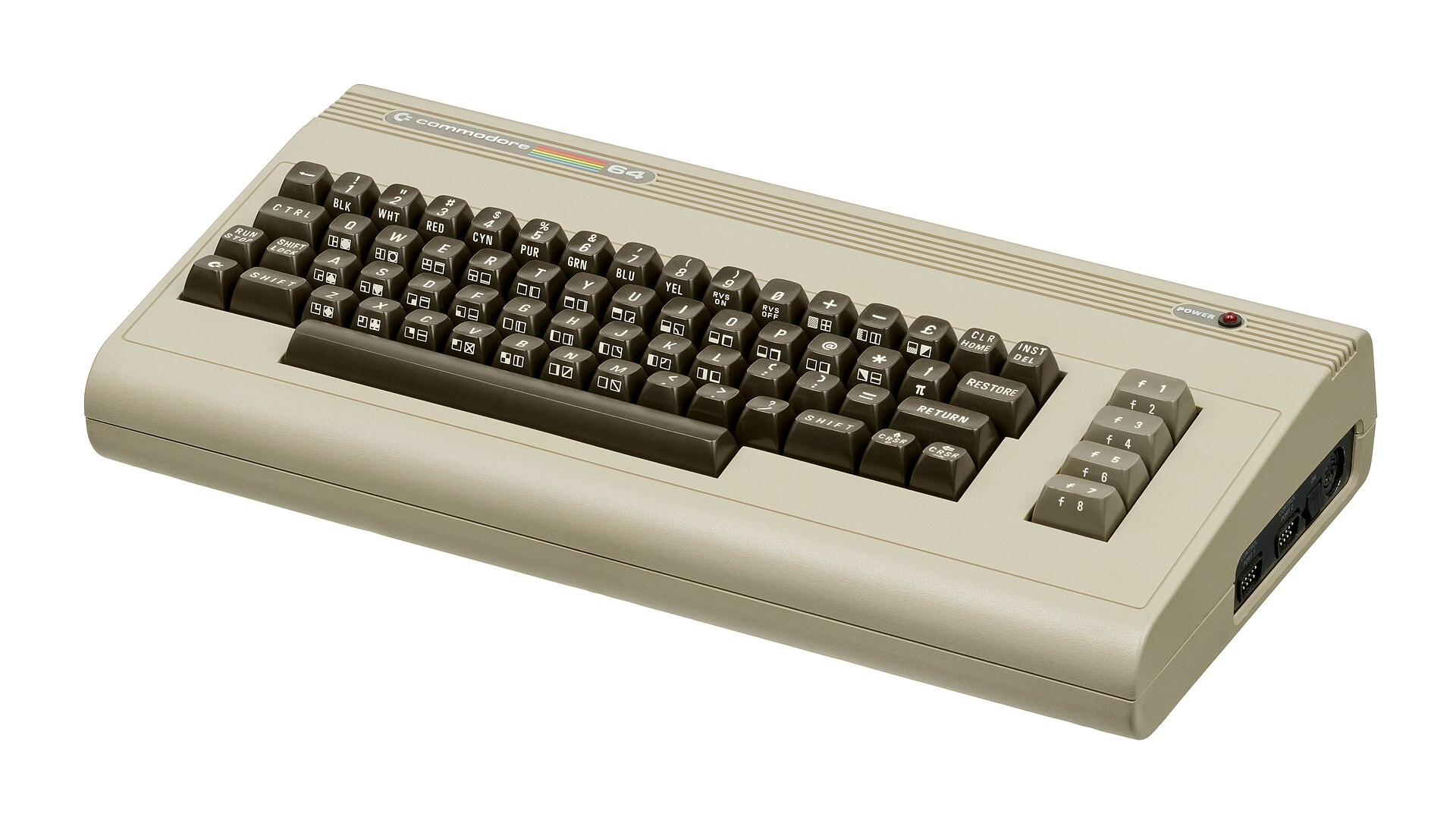 Evan-Amos, CC BY-SA 4.0, via Wikimedia Commons